

Expert Insights
Industrial Digitalization: An Inevitable Choice in the Era of Industry 4.0


The digitalization of the industries was long pending, but the pandemic forced industries to adopt it rapidly. In this era of a new industrial revolution that we call Industry 4.0, there is deep integration of digital technologies with traditional industries. This has completely reshaped how we manufacture, manage, and deliver products and services.
For some industries like manufacturing, the integration of industrial digitalization is no longer a choice; it's a necessity. Not only is it a fast way to increase the competitiveness of the industry, but it also promotes innovation and reliable operations. Let's have a closer look at industrial digitalization and its impact.
What is Industrial Digitalization?
Industrial digitalization means the use of digital technologies across all stages of industrial production and management. Organizations that adopt digital transformation into their manufacturing systems become highly intelligent, interconnected, and efficient ecosystems. Here are the main technological pillars of industrial digitalization:
● IoT (Internet of Things): It connects machines, products, and systems to collect and share data in real time.
● Artificial Intelligence and Machine Learning: These technologies analyze large volumes of data. They are used to optimize operations, predict failures, and improve decision-making.
● Big Data Analytics: They can extract actionable insights from complex and massive datasets.
● Cloud Computing: It provides scalable infrastructure, data storage, and services without heavy upfront investments.
● Robotics and Automation: These technologies can enhance production speed, accuracy, and efficiency, and also minimize human error.
Main Changes Brought by Industrial Digitalization
The shift towards a smart Industry 4.0 model has brought major transformations across all areas of business and for good reasons. Let's have a closer look at these improvements:
1. Improvement in Production Efficiency
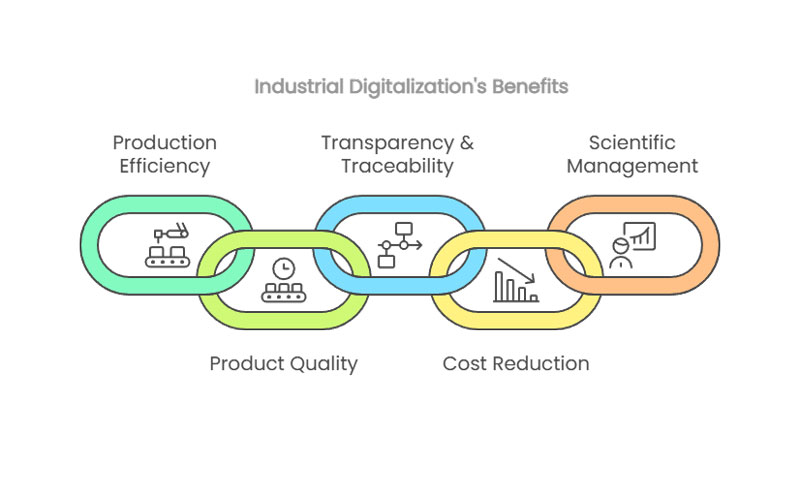
Digital tools have made real-time monitoring and automated adjustments possible on the production line. Machines can communicate easily. This has allowed quicker detection of inefficiencies and faster resolution of problems. As a result, production has become much faster, more reliable, and less likely to disruptions.
2. Standardization of Product Quality
Smart sensors and predictive maintenance technologies have made it possible for us to maintain consistent product quality across every batch. The integration of quality control directly into the production process minimizes defects. As a result, customer satisfaction rises.
3. Enhanced Transparency and Traceability of the Production Process
A digitalization system provides complete visibility into every step of the production chain. We have a record of everything from sourcing raw materials to final product delivery. This makes it easier to identify bottlenecks, trace defects, and ensure compliance with regulatory standards.
4. Reduction in Overall Costs
Automation and predictive analytics reduce downtime, optimize resource use, and lower operational expenses. Companies can achieve significant cost savings by minimizing waste and improving maintenance schedules.
5. More Scientific Corporate Management and Decision-Making
The integration of Industry 4.0 and digital transformation means that decisions are no longer based solely on intuition or outdated data. Instead, real-time analytics provide clear insights. This way, management can make strategic choices based on facts and trends. This scientific approach to decision-making supports long-term business growth and resilience.
Challenges Faced in Digital Transformation
The future of industrial digitalization is promising. However, the journey towards digitalization is not without obstacles.
1. Technical Integration Issues
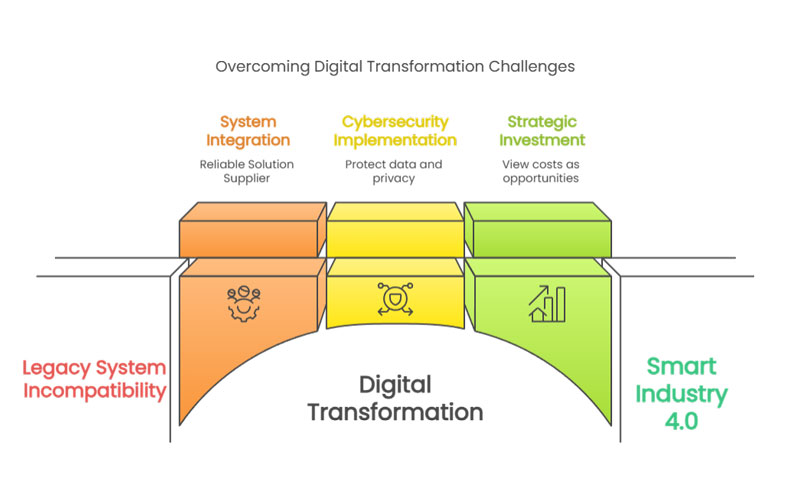
Many traditional factories operate with legacy systems. These systems are not readily compatible with modern digital technologies. Moreover, integrating old and new systems requires expertise and careful planning to avoid production disruptions.
2. Data Security and Privacy Concerns
With greater connectivity comes increased vulnerability. Protecting sensitive company data, intellectual property, and customer information is paramount. Implementing robust cybersecurity measures is essential for a secure and sustainable digital ecosystem.
3. Cost Investment Challenges
When we transition to a smart Industry 4.0 model, it requires a significant upfront investment in infrastructure, training, and technology. However, these costs should be viewed as strategic investments rather than expenses, because they unlock new revenue streams and long-term efficiencies.
CYG Supporting Your Industrial Digitalization
At Changyuan Technology Group (CYG), we believe it firmly that industrial digitalization is no longer a futuristic concept. Companies that embrace Industry 4.0 and digital transformation will not only survive but thrive in an increasingly competitive and digital world.
We are committed to supporting you every step of the way. We identify the right digitalization systems to provide comprehensive digital transformation consulting. CYG acts as your trusted partner in building a smarter, more agile, and more competitive business.
If you are ready to explore the full potential of industrial digitalization and unlock the transformative digitalization benefits it offers, we invite you to reach out to us. Let’s shape the future together with CYG, your partner for sustainable industrial growth. Reach out to our team today, and let’s discuss your project in detail.
